#NepalEconomy #BankingSector #
·

By Sandeep Chaudhary

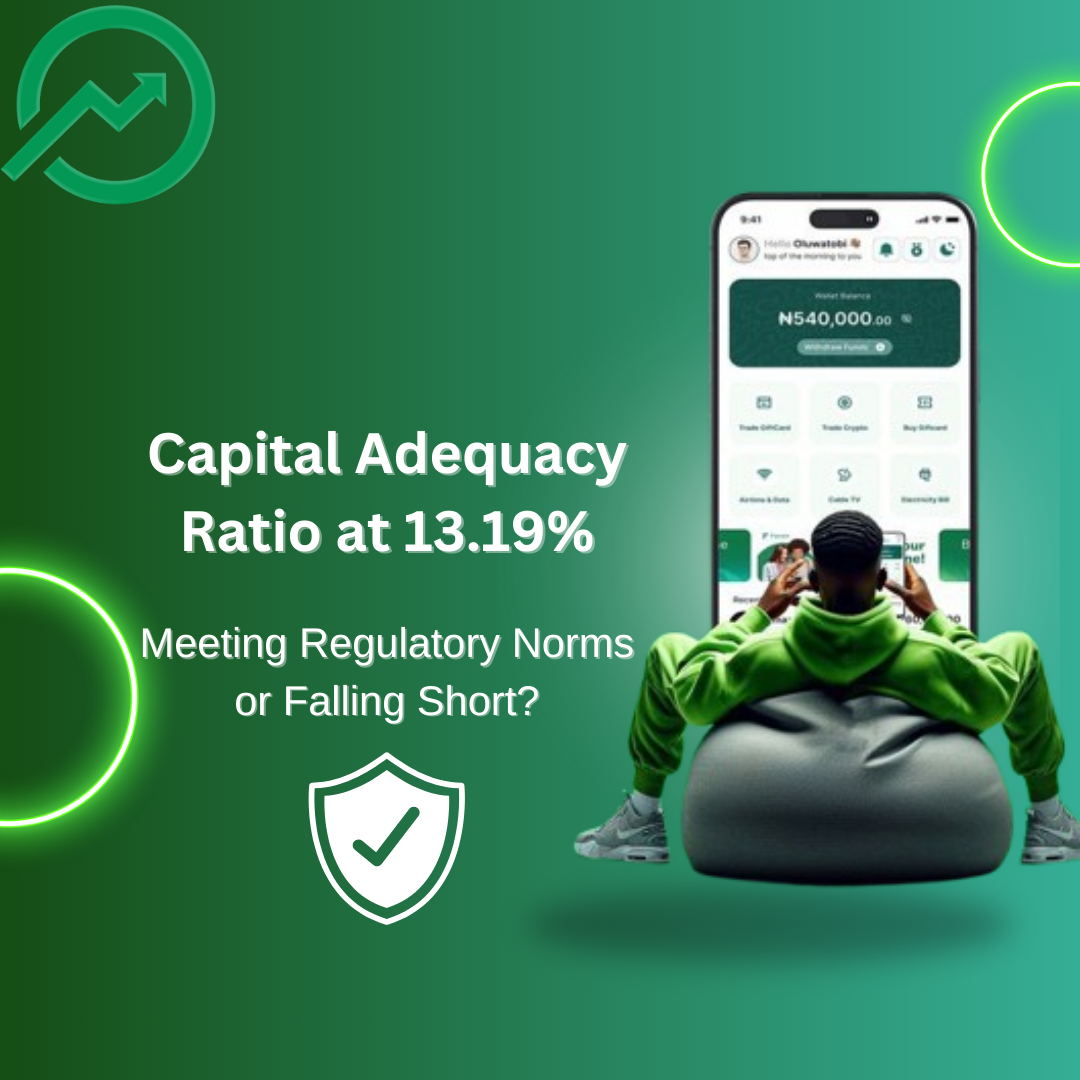
Capital Adequacy Ratio at 13.19%: Meeting Regulatory Norms or Falling Short?
Capital Adequacy Ratio at 13.19%: Meeting Regulatory Norms or Falling Short?

As of Saun End, 2082 (Mid-August 2025), Nepal’s banking sector maintains a Total Capital Adequacy Ratio (CAR) of 13.19%, comfortably above the Nepal Rastra Bank’s minimum requirement of 11%. Within this, the Core Capital (Tier 1) to Risk-Weighted Assets (RWA) ratio stands at 10.04%, while the Total Capital to RWA ratio, including Tier 2 capital, is 13.19%. At first glance, this indicates that the sector is well-capitalized and capable of absorbing potential losses. However, deeper analysis raises questions about whether the current level of capital is sufficient in light of rising credit risks and macroeconomic challenges.

From a regulatory perspective, Nepal’s banking system is meeting the minimum prudential standards. Commercial banks (Class “A”) report a total CAR of 13.14%, development banks (Class “B”) slightly higher at 13.67%, and finance companies (Class “C”) at 13.61%. These figures suggest that, across all classes, banks are aligned with central bank norms. Compared to many regional peers, Nepal’s capital adequacy appears strong, giving comfort to regulators and depositors alike.

Yet, the pressure points are visible. With Non-Performing Loans (NPLs) climbing to 4.62% overall (and over 11% in finance companies), the ability of banks to withstand credit shocks may be weaker than headline ratios suggest. High reliance on fixed deposits (48.14% of total) adds to funding costs, which, combined with increasing provisioning requirements (Loan Loss Provisions at 5.09% of loans), could erode profitability and, over time, weaken capital buffers.

Moreover, Nepal’s economy is in a phase of deep credit penetration—Credit-to-GDP at 91.31%—which increases systemic exposure. While capital levels today appear adequate, any sharp deterioration in loan quality, slowdown in deposit growth, or external shocks (such as remittance volatility or political instability) could test these buffers. In such a scenario, the current 13.19% CAR might be closer to the bare minimum rather than a comfortable cushion.

In essence, Nepal’s banking sector is technically compliant with capital adequacy norms, but whether it is truly resilient depends on how effectively banks manage rising credit risks and maintain profitability in a high-cost funding environment. A proactive approach to strengthening core capital, rather than just meeting the threshold, will be key to ensuring long-term financial stability.

Related Blogs

ABC Securities Investor Pro Meet 2082 Concludes Successfully in Birgunj
Top

3 min read

ABC Securities Investor Pro Meet 2082 Concludes Successfully in Birgunj

ABC Securities Investor Pro Meet 2082 Concludes Successfully in Birgunj The ABC Securities Investor Pro Meet 2082, organized under the financial literacy campaign of ABC Securities, was successfully held in Birgunj with strong participation from investors, market experts, and business leaders. The one-day program included share market training, panel discussions, and interactive sessions aimed at improving investors’ understanding of Nepal’s capital market. According to the organizers, the main objective of the event was to strengthen investors’ knowledge, skills, and confidence so that they can make informed and responsible investment decisions. The program reflected the growing demand for structured and practical market education among Nepalese investors. In recent years, participation in the stock market has increased rapidly, especially among young and first-time investors. However, many of them still lack proper understanding of market risks, technical analysis, and long-term investment planning. By organizing such events, ABC Securities is attempting to bridge this knowledge gap and promote disciplined investment behavior. The ABC Securities Investor Pro Meet 2082, organized under the financial literacy campaign of ABC Securities, was successfully held in Birgunj with strong participation from investors, market experts, and business leaders. The one-day program included share market training, panel discussions, and interactive sessions aimed at improving investors’ understanding of Nepal’s capital market. According to the organizers, the main objective of the event was to strengthen investors’ knowledge, skills, and confidence so that they can make informed and responsible investment decisions. The program reflected the growing demand for structured and practical market education among Nepalese investors. In recent years, participation in the stock market has increased rapidly, especially among young and first-time investors. However, many of them still lack proper understanding of market risks, technical analysis, and long-term investment planning. By organizing such events, ABC Securities is attempting to bridge this knowledge gap and promote disciplined investment behavior.

Dipesh Ghimire

·

23 Feb, 2026