#NepalEconomy #DomesticCredit
·

By Sandeep Chaudhary

Domestic Credit Growth Slows: Risks to Investment in Nepal
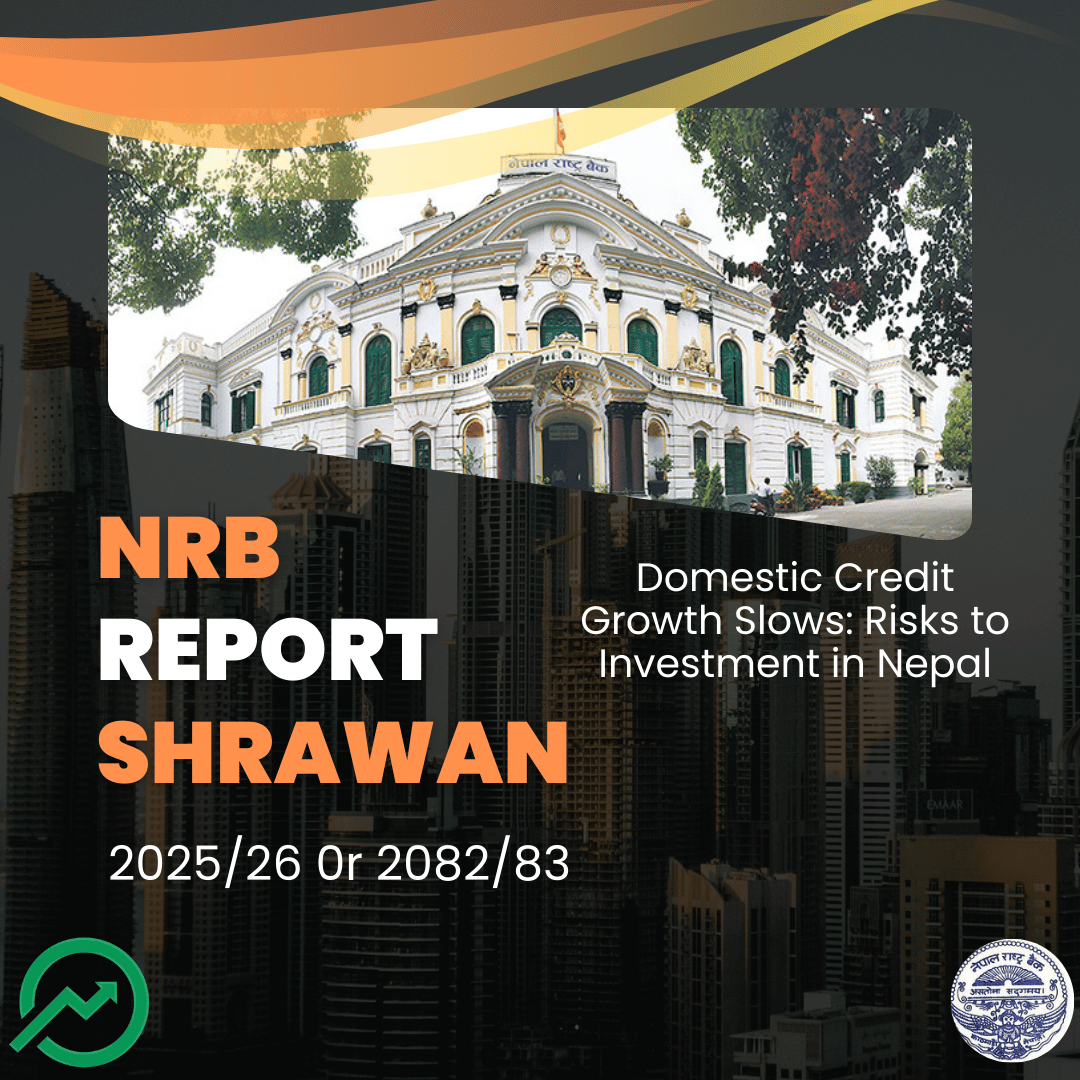
Domestic Credit Growth Slows: Risks to Investment in Nepal

Domestic credit is a crucial engine for investment and economic expansion, as it reflects the flow of funds from banks and financial institutions into businesses, households, and the government. In Nepal, however, domestic credit growth has slowed considerably in recent years, raising concerns about its impact on investment. After growing by a robust 27.1% in FY 2020/21—a post-pandemic rebound fueled by liquidity injections and rising demand—credit growth dropped sharply to 14.5% in FY 2021/22, then further to 8.9% in FY 2022/23, and only 6.1% in FY 2023/24. By FY 2024/25, it grew just 6.2%, and mid-August 2082/83 data shows an even weaker pace of 5.4% year-on-year.

This slowdown has direct implications for Nepal’s investment climate. Weak credit expansion suggests that businesses are not borrowing enough to finance new projects, expand capacity, or invest in innovation. Households, too, are more cautious about borrowing, given subdued income growth and concerns over repayment capacity. At the same time, banks, flush with deposits from strong remittance inflows, are struggling to channel funds into productive lending. This mismatch—ample liquidity but weak credit demand—points to a lack of investor confidence and a sluggish private sector.

The risks are significant. With Gross Fixed Capital Formation already declining to 24.1% of GDP in FY 2024/25, reduced credit growth could further weaken investment momentum. Infrastructure projects, manufacturing expansion, and small business financing may all face bottlenecks, slowing job creation and economic diversification. If this trend persists, Nepal could remain locked in a cycle where remittances fuel consumption and deposits, but investment—critical for long-term growth—remains constrained.

From a policy standpoint, the challenge lies in stimulating productive credit demand without encouraging excessive risk-taking. This requires improving the business climate, reducing bureaucratic barriers, offering incentives for SMEs, and directing lending toward sectors like hydropower, agro-processing, and IT that can generate sustainable returns. Unless domestic credit growth revives, Nepal risks falling short of its growth potential despite having strong liquidity buffers.
Related Blogs

ABC Securities Investor Pro Meet 2082 Concludes Successfully in Birgunj
Top

3 min read

ABC Securities Investor Pro Meet 2082 Concludes Successfully in Birgunj

ABC Securities Investor Pro Meet 2082 Concludes Successfully in Birgunj The ABC Securities Investor Pro Meet 2082, organized under the financial literacy campaign of ABC Securities, was successfully held in Birgunj with strong participation from investors, market experts, and business leaders. The one-day program included share market training, panel discussions, and interactive sessions aimed at improving investors’ understanding of Nepal’s capital market. According to the organizers, the main objective of the event was to strengthen investors’ knowledge, skills, and confidence so that they can make informed and responsible investment decisions. The program reflected the growing demand for structured and practical market education among Nepalese investors. In recent years, participation in the stock market has increased rapidly, especially among young and first-time investors. However, many of them still lack proper understanding of market risks, technical analysis, and long-term investment planning. By organizing such events, ABC Securities is attempting to bridge this knowledge gap and promote disciplined investment behavior. The ABC Securities Investor Pro Meet 2082, organized under the financial literacy campaign of ABC Securities, was successfully held in Birgunj with strong participation from investors, market experts, and business leaders. The one-day program included share market training, panel discussions, and interactive sessions aimed at improving investors’ understanding of Nepal’s capital market. According to the organizers, the main objective of the event was to strengthen investors’ knowledge, skills, and confidence so that they can make informed and responsible investment decisions. The program reflected the growing demand for structured and practical market education among Nepalese investors. In recent years, participation in the stock market has increased rapidly, especially among young and first-time investors. However, many of them still lack proper understanding of market risks, technical analysis, and long-term investment planning. By organizing such events, ABC Securities is attempting to bridge this knowledge gap and promote disciplined investment behavior.

Dipesh Ghimire

·

23 Feb, 2026