#NepalEconomy #PublicDebt #Dom
·

By Sandeep Chaudhary

Domestic vs External Debt: Which Burden Is Heavier for Nepal?
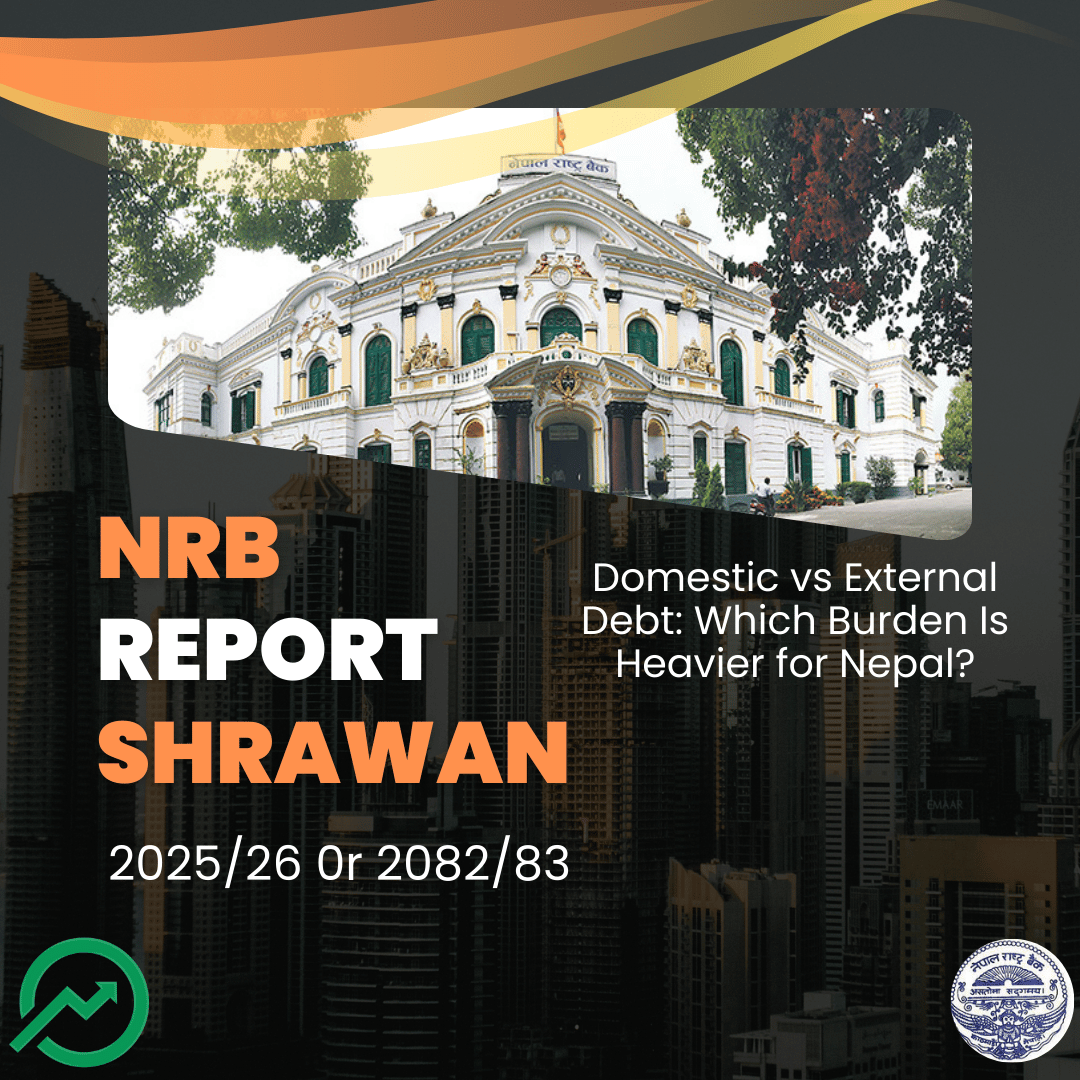
Domestic vs External Debt: Which Burden Is Heavier for Nepal?

Nepal’s public debt has been steadily rising, split between domestic debt and external debt, each carrying its own challenges. As of FY 2024/25, domestic debt stood at Rs. 1.27 trillion (20.8% of GDP), while external debt reached Rs. 1.40 trillion (22.9% of GDP). Together, total public debt now exceeds 43% of GDP, which is manageable by global standards but worrying given Nepal’s weak revenue mobilization and low capital expenditure efficiency.

Domestic debt is generally considered less risky because it is raised in local currency and serviced from internal revenues. Nepal relies heavily on treasury bills and bonds, which are absorbed by banks and financial institutions. However, the rapid buildup of domestic debt creates crowding-out effects: banks prefer lending to the government over riskier private borrowers, limiting credit growth for businesses. With private sector credit growth already modest (7.7% in mid-August 2082/83), rising domestic borrowing may further suppress investment. Moreover, servicing domestic debt takes up a growing share of government revenue, squeezing fiscal space for development.

External debt, by contrast, poses currency and repayment risks. Although Nepal’s foreign loans are mostly concessional (from the World Bank, ADB, and bilateral partners), they are denominated in foreign currencies. This creates vulnerabilities if remittance inflows or foreign exchange reserves falter. Currently, reserves are strong at over USD 20 billion, providing a buffer, but Nepal’s heavy reliance on remittances (Rs. 1.7 trillion inflows in FY 2024/25) means its debt sustainability is tied to external labor markets and global economic conditions. Furthermore, Nepal’s low capital expenditure efficiency means borrowed funds often fail to generate the returns needed for repayment, raising the risk of debt dependency.

When comparing burdens, external debt carries greater long-term risks, as it is vulnerable to exchange rate fluctuations, global interest rate changes, and declining remittance inflows. Domestic debt, though easier to manage, directly impacts liquidity, investment, and fiscal flexibility. In essence, Nepal faces a dual challenge: managing domestic borrowing without crowding out private sector growth, while ensuring external debt is channeled into high-return projects that enhance foreign exchange earnings.


Related Blogs

ABC Securities Investor Pro Meet 2082 Concludes Successfully in Birgunj
Top

3 min read

ABC Securities Investor Pro Meet 2082 Concludes Successfully in Birgunj

ABC Securities Investor Pro Meet 2082 Concludes Successfully in Birgunj The ABC Securities Investor Pro Meet 2082, organized under the financial literacy campaign of ABC Securities, was successfully held in Birgunj with strong participation from investors, market experts, and business leaders. The one-day program included share market training, panel discussions, and interactive sessions aimed at improving investors’ understanding of Nepal’s capital market. According to the organizers, the main objective of the event was to strengthen investors’ knowledge, skills, and confidence so that they can make informed and responsible investment decisions. The program reflected the growing demand for structured and practical market education among Nepalese investors. In recent years, participation in the stock market has increased rapidly, especially among young and first-time investors. However, many of them still lack proper understanding of market risks, technical analysis, and long-term investment planning. By organizing such events, ABC Securities is attempting to bridge this knowledge gap and promote disciplined investment behavior. The ABC Securities Investor Pro Meet 2082, organized under the financial literacy campaign of ABC Securities, was successfully held in Birgunj with strong participation from investors, market experts, and business leaders. The one-day program included share market training, panel discussions, and interactive sessions aimed at improving investors’ understanding of Nepal’s capital market. According to the organizers, the main objective of the event was to strengthen investors’ knowledge, skills, and confidence so that they can make informed and responsible investment decisions. The program reflected the growing demand for structured and practical market education among Nepalese investors. In recent years, participation in the stock market has increased rapidly, especially among young and first-time investors. However, many of them still lack proper understanding of market risks, technical analysis, and long-term investment planning. By organizing such events, ABC Securities is attempting to bridge this knowledge gap and promote disciplined investment behavior.

Dipesh Ghimire

·

23 Feb, 2026