#NepalDebt #FiscalPolicy #Gove
·

By Sandeep Chaudhary

Who Finances Nepal’s Debt? Deep Dive into Treasury Bills, Bonds, and Institutional Holders
Who Finances Nepal’s Debt? Deep Dive into Treasury Bills, Bonds, and Institutional Holders

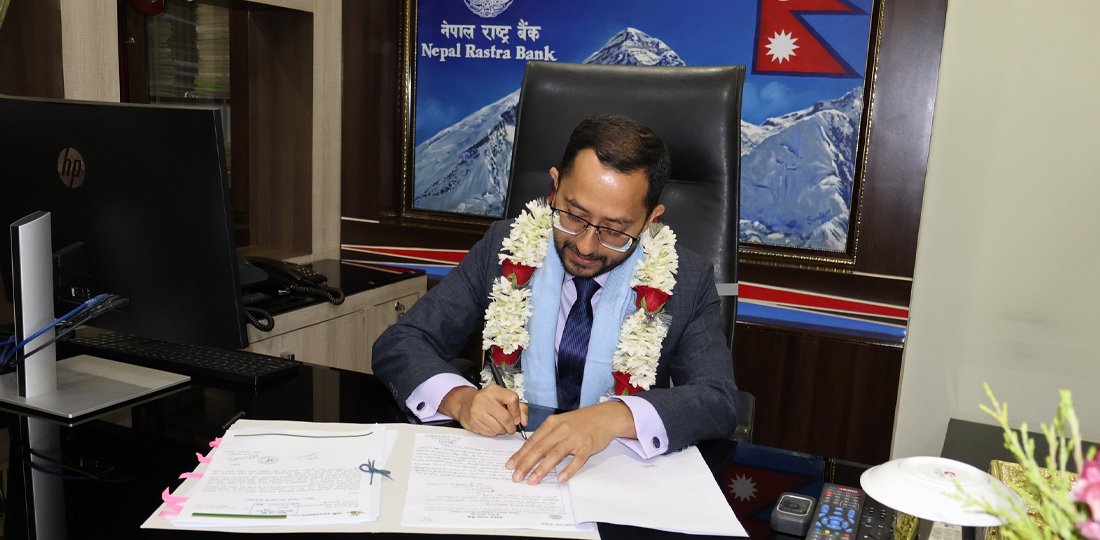
Nepal’s growing domestic debt, now at a record Rs. 1.27 trillion, is increasingly financed by commercial banks and institutional investors, revealing a deepening interdependence between the government and the banking system. Data from Nepal Rastra Bank shows that commercial banks alone hold more than Rs. 1.02 trillion of the government’s debt instruments — a staggering 80% of total domestic liabilities.

The government primarily borrows through two key instruments: short-term Treasury Bills (T-Bills) and long-term Development Bonds. Over the past year, the balance has shifted sharply. Treasury Bills declined by Rs. 27 billion, reflecting a move away from short-term financing. In contrast, Development Bonds surged by Rs. 39.9 billion, reaching Rs. 913.7 billion, as the Ministry of Finance opted for more stable but higher-cost debt.

Commercial banks have emerged as the dominant creditors, increasing their exposure due to limited private-sector credit demand and attractive bond yields. Development banks and finance companies play smaller roles, holding roughly Rs. 91 billion and Rs. 17 billion, respectively. Meanwhile, the Nepal Rastra Bank’s own holdings have fallen sharply to Rs. 12 billion, the lowest in years — signaling a deliberate effort to limit central-bank financing and preserve monetary discipline.

The “others” category, which includes pension funds, insurance companies, cooperatives, and citizen investors, has expanded its footprint by Rs. 19.4 billion, indicating a slow but steady diversification of Nepal’s debt base. This is seen as a positive trend, as broader investor participation helps distribute risk and deepen the domestic capital market.

However, experts caution that excessive bank concentration in government securities could crowd out private investment, reduce liquidity flexibility, and amplify systemic risk if fiscal stress rises. As the debt-to-GDP ratio continues to edge higher, the sustainability of Nepal’s borrowing model will depend on whether revenue mobilization and expenditure reforms can keep pace.
Related Blogs

ABC Securities Investor Pro Meet 2082 Concludes Successfully in Birgunj
Top

3 min read

ABC Securities Investor Pro Meet 2082 Concludes Successfully in Birgunj

ABC Securities Investor Pro Meet 2082 Concludes Successfully in Birgunj The ABC Securities Investor Pro Meet 2082, organized under the financial literacy campaign of ABC Securities, was successfully held in Birgunj with strong participation from investors, market experts, and business leaders. The one-day program included share market training, panel discussions, and interactive sessions aimed at improving investors’ understanding of Nepal’s capital market. According to the organizers, the main objective of the event was to strengthen investors’ knowledge, skills, and confidence so that they can make informed and responsible investment decisions. The program reflected the growing demand for structured and practical market education among Nepalese investors. In recent years, participation in the stock market has increased rapidly, especially among young and first-time investors. However, many of them still lack proper understanding of market risks, technical analysis, and long-term investment planning. By organizing such events, ABC Securities is attempting to bridge this knowledge gap and promote disciplined investment behavior. The ABC Securities Investor Pro Meet 2082, organized under the financial literacy campaign of ABC Securities, was successfully held in Birgunj with strong participation from investors, market experts, and business leaders. The one-day program included share market training, panel discussions, and interactive sessions aimed at improving investors’ understanding of Nepal’s capital market. According to the organizers, the main objective of the event was to strengthen investors’ knowledge, skills, and confidence so that they can make informed and responsible investment decisions. The program reflected the growing demand for structured and practical market education among Nepalese investors. In recent years, participation in the stock market has increased rapidly, especially among young and first-time investors. However, many of them still lack proper understanding of market risks, technical analysis, and long-term investment planning. By organizing such events, ABC Securities is attempting to bridge this knowledge gap and promote disciplined investment behavior.

Dipesh Ghimire

·

23 Feb, 2026